Industry Insights for September
Army Selects New York’s Fort Drum to Host Nuclear Microreactor

The U.S. Army announced in August that New York’s Fort Drum has been selected as one of five military installations to host a nuclear microreactor. This is part of the Janus Program, an initiative designed to ensure energy resilience and readiness for our nation’s military through the development of next-generation nuclear power technologies.
These microreactors are compact nuclear systems that generate under 20 megawatts (MWe) of electricity and take up less than five acres of land. The Janus Program represents a unique public-private partnership, as the microreactors will be entirely built, owned and operated by private companies with strict oversight from the Army and federal regulators. Fort Drum’s microreactor will be the Westinghouse eVinci and will be administered by the energy giant. The program has a target date of September 30, 2028 to get at least one of the five microreactors producing usable electricity on base.
The initiative comes on the heels of New York’s own planned investment in new nuclear energy capacity, together representing a huge shift in both technology and energy policy in the state.
Read more: Army selects Fort Drum for Janus Program microreactor | Article | The United States Army
US Navy Eyes Foreign Frigate Designs to Close Shipbuilding Gap with China
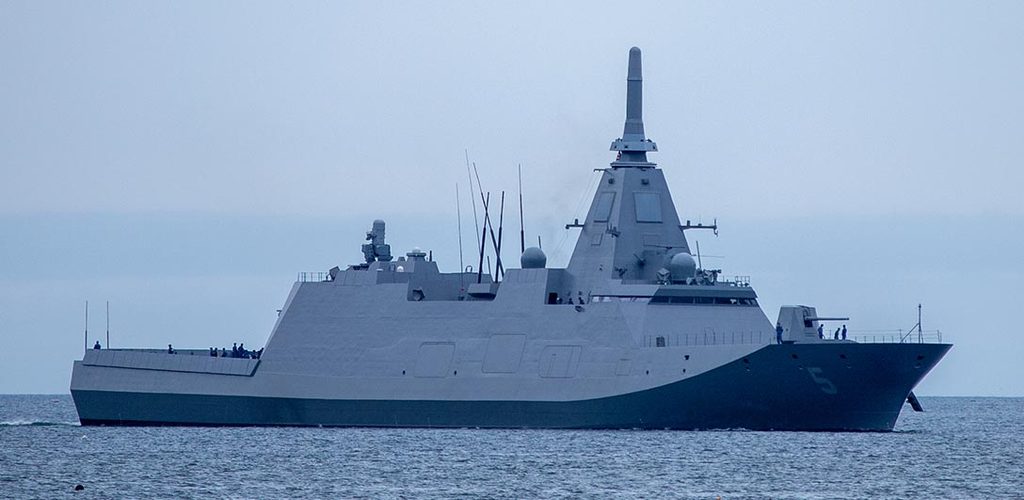
The Pentagon and White House are considering frigate models designed and built in Japan, South Korea, and Turkey to increase shipbuilding capacity to keep up with China’s navy, which currently has more ships than the United States.
While federal law prohibits foreign-built warships from serving in the U.S. Navy, the White House is considering bypassing the hurdle through a “national security” waiver. The President urged Congress in an August memo to consider foreign-built warships to help meet the administration’s goal of ramping up U.S. Navy shipbuilding capacity. The 2027 federal budget already includes funding to acquire up to two foreign-built ships as a precursor to continued manufacturing and construction in domestic shipyards.
The U.S. Navy currently has no frigates, and the Navy’s recent Constellation-class guided-missile frigate program was cancelled last year. This development would represent both a new class of ship and a opportunity to significantly expand the U.S. fleet.
Read more: US Navy considering these three foreign ships for new frigate design
Study: Federal Investment in Small Market Mass Transit Makes an Outsized Impact

A recent joint study conducted by American and Chinese researchers concluded that federal funding for mass transit in smaller urban areas is the biggest factor in increasing ridership and availability. The authors noted that while cities of all sizes benefit from federal support, the impact is more significant in smaller towns and cities where leaner transit agencies can expand services more efficiently.
Read more: https://futurism.com/advanced-transport/government-spending-mass-transit-us-cities-small-towns-research
US Gulf of Mexico Oil and Gas Lease Sale Attracts $82.7 Million in High Bids

The Trump administration held the latest sale in a series of auctions in August, securing $82.7 million USD in bids on acres in the Gulf of America. The sales were authorized by the 2025 One Big Beautiful Bill Act (OBBBA) and are planned to continue through 2040. Sixteen companies submitted bids on a small fraction of the 80 million acres made available, including global powerhouses BP, Chevron, and Shell. The purpose of the sales is to boost domestic energy production, lower energy prices, and strengthen national security.